
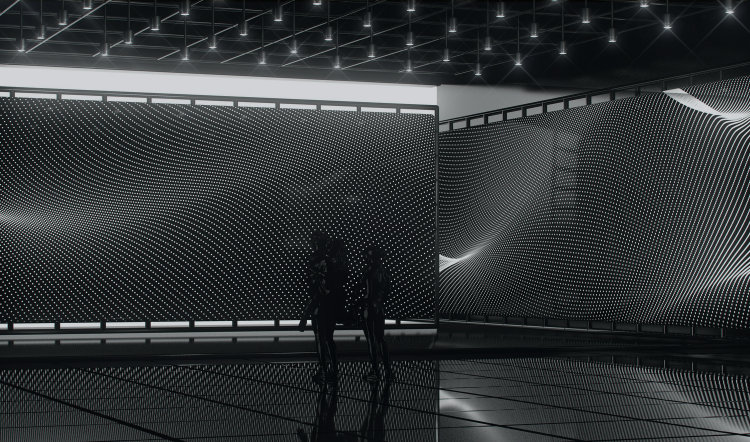
Mounting a commercial LED video wall comes down to three decisions made before a single panel goes up: the mounting method, the power distribution plan, and a structural load assessment. Method depends partly on viewing height and sightlines. Load assessment covers weight capacity, wall flatness, and any recessed mounting or ADA clearance the space requires. Get those three right early and the installation itself is straightforward. Skip them and you're troubleshooting a sagging frame six months in.
- Mounting method depends on wall type, ceiling height, and viewing height and sightlines, not just where the wall physically fits
- Power draw varies more than people expect. Brightness requirements drive it more than resolution does
- Structural load isn't optional math. A finished wall can weigh hundreds of pounds per section, and wall flatness affects which mount works
- Recessed mounting and ADA clearance are structural questions, not finishing touchesss affects which mount works
- A structural engineer signs off on anything load-bearing. This guide gets you ready for that conversation, not around it
What mounting methods work for commercial LED video walls?
Viewing height and sightlines drive method choice as much as wall type does. A lobby wall viewed from across an atrium sits differently than a boardroom wall viewed from ten feet away. Pick the mount before you pick the wall and you're solving the wrong problem first.
-
Wall-mounted frames bolt directly to a reinforced wall or dedicated steel framing built into the wall assembly. This is the most common approach for lobbies, boardrooms, and reception areas where the wall is a fixed architectural feature. It requires the wall behind the display to be built or reinforced to hold the load, which is a conversation that needs to happen at the framing stage of construction, not after drywall is up and everyone's moved on.
-
Floor-standing frames carry the wall's weight on a freestanding structure instead of the building wall. This shows up in trade show environments, temporary installations, and spaces where the wall itself can't take a mounting load. The tradeoff is footprint. A floor-standing frame needs base depth for stability, and that depth comes out of somebody's room.
-
Suspended or rigged installations hang the wall from ceiling structure, usually in atriums, auditoriums, or spaces where the display needs to float above sightlines. This is the most structurally demanding option and the one where ceiling capacity gets checked first, not last, and definitely not never.
Most commercial LED panels today are front-serviceable, meaning modules open or release magnetically from the face rather than requiring access from behind. That changes the mounting math: instead of planning depth for a technician's hands behind the wall, you're planning clearance in front of it for service.
Confirm with your integrator whether your specific panel line is front- or rear-serviceable before finalizing mount depth. Guessing wrong here means finding out during the first service call, not before it.
What power requirements should you plan for?
LED video wall power draw varies more than a blanket comparison to typical displays would suggest, mostly because “typical display” is doing a lot of work in that sentence. The biggest driver isn't resolution, it's brightness. A lobby wall fighting ambient daylight needs far more nits, and far more power, than a conference room wall viewed in controlled lighting. Some efficient panel lines can even pull less than a comparable television, since there's no backlight running behind the whole panel regardless of content.
A few things worth nailing down before the electrical rough-in:
-
Circuit count and placement. Larger walls split power across multiple circuits, not one outlet behind the frame. That circuit plan needs to be part of the electrical drawings, not a phone call after the wall shows up.
-
Controllable power supplies. Panels with controllable or scheduled power supplies need that coordination planned behind the mount early. Skip it and you're retrofitting a solution that should have been a line item.
- Dedicated circuits. Shared circuits with other building loads invite flickering and unplanned outages. LED walls get their own. They don't share well.
This is the kind of detail that's easy to skip when a wall is being priced and expensive to fix once it's mounted. It's also exactly what the LED wall cost calculator accounts for when it asks about your space. Run your specs through it before the quote stage so power isn't a surprise line item later.
What structural load considerations matter before installation?
A finished commercial LED wall is heavier than it looks, which is not a compliment to the wall. Panels, frame, cabling, and mounting hardware add up fast, and that weight has to land somewhere the building can actually support.
Before mounting:
-
Confirm what the wall, floor, or ceiling structure is rated to carry, and compare that against the finished weight of the display, frame, and hardware combined
-
Check wall flatness and trueness. Minimal, low-profile mounts have little tolerance for an uneven wall, while brick or block surfaces can often be corrected for with a mount that has micro-adjustment built in
-
Identify whether the mounting point lands on structural framing or just drywall and finish material. Finish surfaces hold paint, not video walls
-
Confirm recessed mounting and ADA clearance requirements up front if the space calls for either. Both change the framing and rough-in plan, not just the final trim-out
-
Factor in service access based on how the panel line is serviced, front or rear, since that determines what clearance the mount actually needs
None of this is a guess-and-check process. It's engineering, and it gets treated that way.
When do you need a structural engineer?
Anytime the mounting point is load-bearing, which for most commercial LED walls, it is. A structural engineer confirms the wall, floor, or ceiling assembly can carry the finished weight and signs off on the mounting method before installation begins. This isn't a box to check. It's the difference between a wall that stays flat for ten years and one that doesn't.
If you're at the planning stage and don't yet have those numbers, that's normal. It's what the design and engineering phase of an installation is for.
Curious what drives the price tag itself? How Much Does an LED Wall Cost?
Frequently Asked Questions
How much does a commercial LED video wall weigh?
Weight varies by panel type, size, and pixel pitch, but finished commercial walls commonly run into the hundreds of pounds once frame and hardware are included. Get exact figures from your equipment specs before finalizing a mounting plan.
Can an existing wall support an LED video wall?
Sometimes, but it depends on what's behind the drywall. Standard interior walls usually need added structural framing. A structural engineer or your integrator can confirm what your specific wall can carry.
Do LED video walls need dedicated electrical circuits?
Yes, in most commercial installations. Shared circuits with other building loads risk flickering or outages, and panels with controllable power supplies need that coordination planned early.
How far in advance should mounting be planned?
Ideally during the design and construction phase, before walls are finished and electrical rough-in is complete. Retrofitting structural support after the fact is possible but more disruptive and more expensive.
Do LED walls need rear access for maintenance?
Most commercial panels today are front-serviceable, with modules that open or release from the face. Confirm your specific panel line's service style before locking in mounting depth and clearance.
Before you spec anything, run your room through the LED wall cost calculator; it factors in the specs that drive both cost and mounting requirements, so you're planning with real numbers instead of guesses.

