In addition to being just plain annoying, office sounds that you have no control over are distracting, stressful and detrimental to productivity. Noise pollution is especially common in open office floor plans, and one-third of workers believe distractions and noise from this type of open floor plan work environment makes it harder to do their jobs effectively.
Dips in productivity mean wasted time and resources, which costs businesses millions of dollars each year. Because of the interruption sound can cause, companies are exploring office soundproofing techniques to get their workplace back on track.
4 Ways Noise Pollution is Affecting Your Office
Sound Absorption
Sound Masking
Office Soundproofing Tips
What Type of Solution Is Right For You?
>> Get the complete guide to office audio visual technology here!
Noise is everywhere in an office. Computers, printers, typing, phones, conversations and moving chairs are only just some examples of background noise that can really take someone’s attention away from their responsibilities.
Open concept floor plans don’t have the benefit of barriers or walls that help block some of this noise, which means sound waves are free to travel throughout the entire office. This creates several problems, including:
Fortunately, these are problems that can all be solved with the right office soundproofing technique. The two we’re focusing on are sound absorption and sound masking.
Before we get into the details of these methods, just remember that the right technique will depend on your unique environment.
Ideal for: Conference rooms, offices, concert halls and dining areas. Sound absorption is most common in large spaces that produce echoes.
How it Works: Just like a sponge soaks up water, sound absorption takes in noise. The process works by utilizing absorbing materials and acoustic panels.
Acoustic panels take in as much sound energy as possible so that it doesn’t bounce off the walls. Part of the energy is transformed into heat while the rest is transmitted through the absorbing material. Much like a painting, panels can be easily mounted on a wall. Think of them as a functional piece of art. They can be made in any shape or size and designed any way you choose.
Add your company logo, a relaxing design or go with a theme like we did with our Fender conference room!
How it Works: Masking covers excess noise by actually adding sound. You’re probably thinking, “Why would I add sound to an already noisy area?”
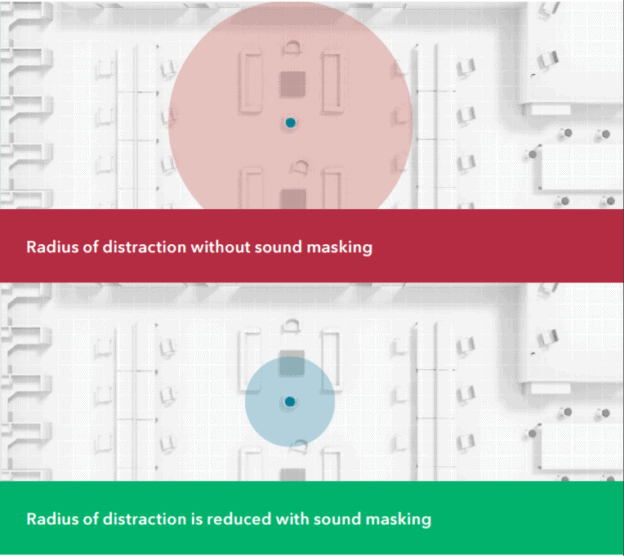
The added sound creates a low level of engineered background noise. Sound masking raises the sound floor so that the average noise level rises and you can’t hear the people next to you. This makes an area feel quieter because it adds to the intelligibility of speech. In other words, when you can’t understand what people around you are saying, it’s harder to become distracted by their conversations.
Sound masking emits ambient noise through small speakers that are seamlessly installed along a simple grid pattern. The noise is engineered to match the frequency of human speech, making it a cost-efficient way to reduce noise distractions.
When researching office soundproofing methods, don’t forget to:
There are many factors to consider as you explore office soundproofing options, such as your overall goals and needs, budget and required materials. Here are some questions to think about:
If you’re looking to minimize noise in conference rooms, offices and other large spaces that produce echoes, sound absorption is an ideal choice. Sound masking is best for open floor plans, but if you aren’t sure which solution is best for you, we’d be happy to help.
The best tip we can offer as you research office soundproofing is this: Go with the experts! Acoustics are a specialized field and sound management experience is essential for increasing the comfort of your office and the productivity of your employees.
Contact DGI for all of your sound absorption and sound masking needs! We specialize in sound management as well as acoustic art panels. Interested in upgrading your office’s audiovisual technology? Get our complete guide to office audio visual technology here!