Welcome to the first blog in our 8 AV Topics Everyone’s Talking About in 2026 series, a look at the trends shaping how organizations design, support, and evolve the spaces where people meet and collaborate.
Across industries, one shift is already well underway. AV over IP has replaced traditional routing as the standard approach for distributing audio and video. This isn’t just a technical evolution. It’s a response to what IT, facilities, and operations teams have been asking for: more flexibility, more transparency, cleaner infrastructure, stronger security, and AV systems that actually align with how the network is managed.
Here is why this shift matters and why it continues to accelerate.
AV That Finally Fits the IT Model
For years, AV lived in its own world: dedicated switchers, proprietary cabling, specialized hardware, and a support model that didn’t always match IT workflows. AV-over-IP flips that by allowing audio and video to travel over the network infrastructure organizations already trust.
This means:
- Standard IT switching and architecture
- Familiar tools for monitoring and management
- Centralized visibility (no more guessing what’s online)
- Easier troubleshooting and fewer isolated systems
It feels less like a separate AV stack — and more like another extension of the network.
Scaling Without the Limitations of Hardware
Traditional routing requires you to plan around physical switch limits. If you outgrow the system? You replace the hardware.
AV-over-IP removes that constraint.
Organizations can:
- Add a new display or source
- Expand a room
- Connect multiple buildings
- Scale campus-wide content sharing
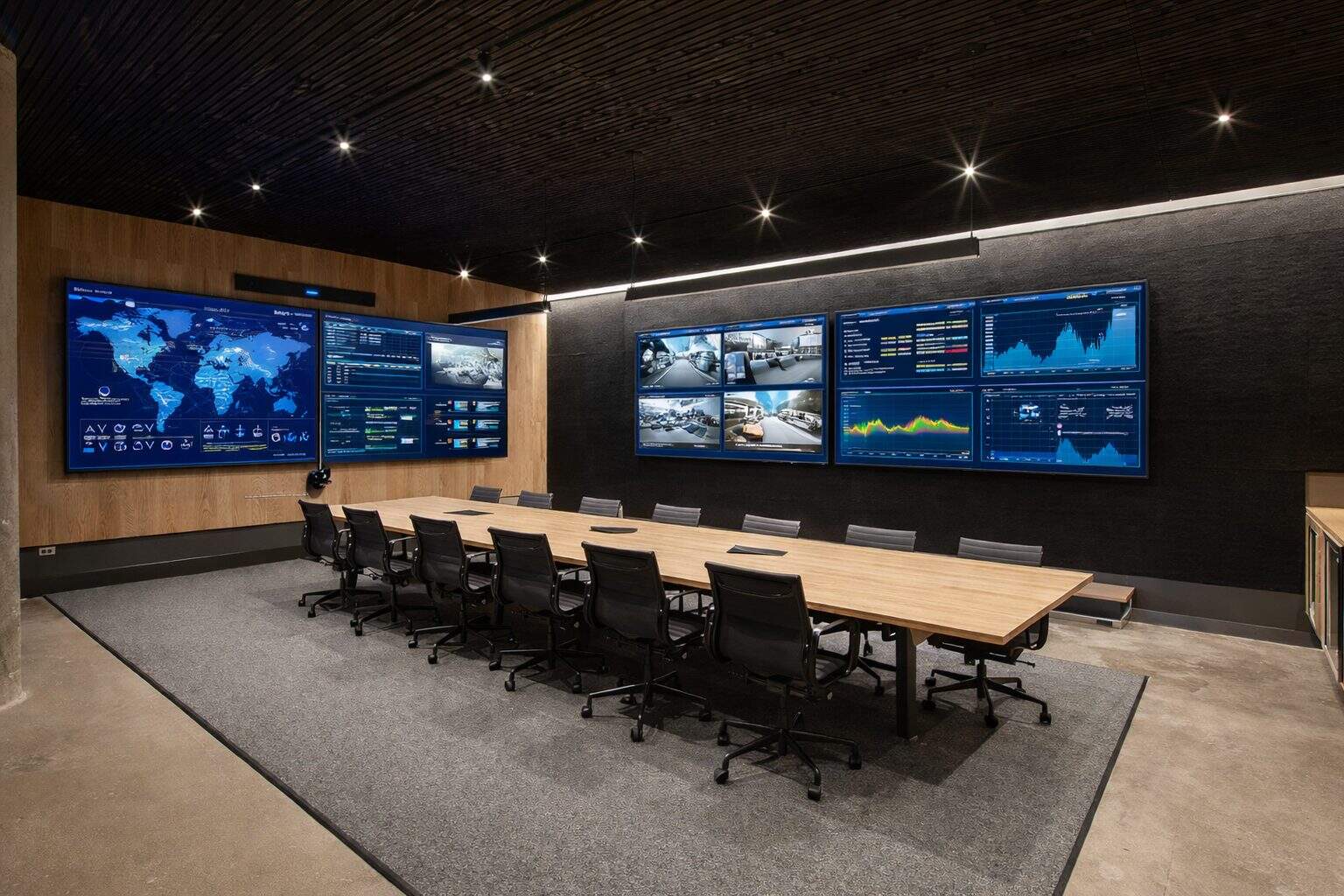
…all by adding endpoints and configuring the network. For hybrid workplaces, multi-purpose rooms, and command/control environments, this flexibility is becoming essential.
Cleaner Installations and Better Reliability
When AV routes through the network, rooms become simpler and cleaner.
- Fewer cable types
- Less proprietary hardware
- More consistent performance
- Higher quality video and audio
Because everything is networked, issues are easier to isolate and address before they impact meetings. Instead of reacting to failures, teams gain better visibility into system health.
Cleaner infrastructure supports a more proactive approach to support and results in more reliable spaces overall.
Longer Lifespan Through Software-Driven Updates
In traditional AV systems, hardware ages quickly. New features often require new equipment.
AV-over-IP systems evolve like software. Firmware updates, security patches, and feature enhancements are pushed across the network.
Organizations gain:
- Longer system life
- Stronger security
- Consistent user experience across rooms
- Flexibility to adapt to new workflows
You don’t have to rebuild rooms every time technology moves forward.
Designed for the Realities of Hybrid Work
Hybrid work has created a new set of expectations:
- Flexible sharing workflows
- Reliable remote participation
- Rooms that can support different meeting types
- Seamless connection across departments or campuses
AV-over-IP supports these dynamic needs because it’s designed for mobility, scale, and adaptability — not rigid point-to-point routes.
Centralized Management That IT and Operations Actually Want
This is where the value becomes undeniable.
With the right monitoring platform, teams can:
- See device status in real time
- Identify failures before meetings begin
- Resolve issues remotely
- Reduce support tickets and site visits
- Standardize room performance across locations
Predictability is the new goal — and AV-over-IP delivers it.
A Shift That’s Already Fully Underway
Organizations aren’t experimenting anymore, they’re transitioning.
From Fortune 500 campuses to research labs to municipalities, the move toward network-based AV is accelerating because it:
- Lowers long-term costs
- Improves reliability
- Simplifies scaling
- Fits naturally into IT governance
- Future-proofs rooms without constant rebuilds
It’s not a trend; it’s the new foundation.
What’s Next in the Series
This is Topic #1 in our 8 AV Topics Everyone’s Talking About in 2026 series.
Next, we’ll take a closer look at how digital signage and LED are redefining visual communication. Organizations are moving beyond standard displays and into more intentional use of resolution, scale, and aspect ratios to create immersive experiences that serve both function and design.
From unique content layouts to large format LED surfaces, this shift is changing how information is delivered, how spaces feel, and how people engage the moment they walk in.
