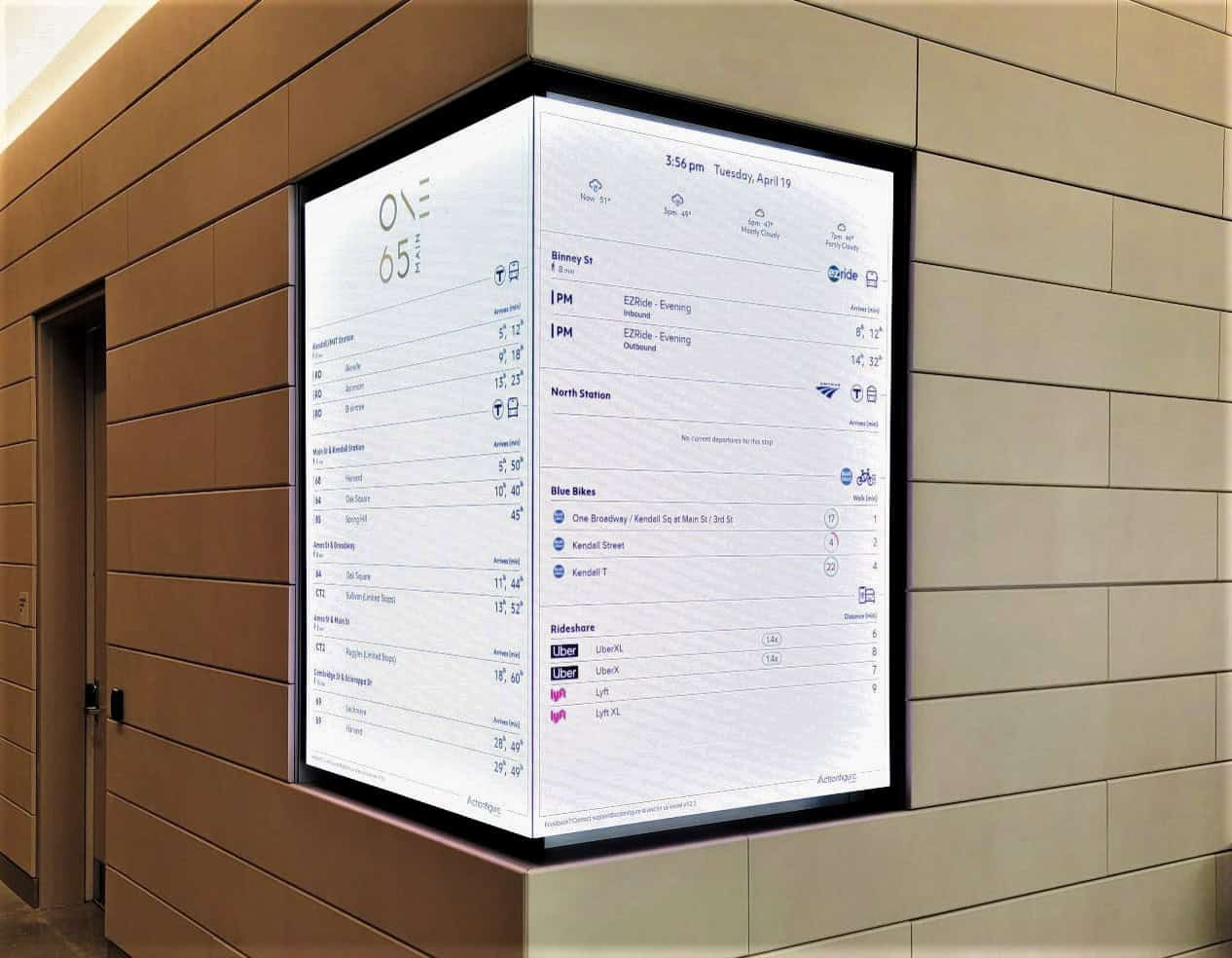

Attention in limited physical spaces are busier than ever and traditional communication tools are not guaranteed to land. Digital signage and LED are taking center stage because they make information clear, immediate, and visible in the places people already move through every day.
Why is digital signage showing up everywhere?
Digital signage is showing up everywhere because people do not read long messages anymore. They scan for answers and move on.
An email asks someone to stop what they are doing open their inbox and care. Digital signage does not ask. It just shows up and does its job.
You can send the perfect message, but if it lands in an inbox with 147 unread emails, it is competing with meeting invites calendar holds and a newsletter someone signed up for in 2019 and forgot about.
Digital signage wins because it does not rely on hope. It relies on placement.
What problem does digital signage actually solve?
Digital signage solves missed communication.
Organizations use it to make answers visible instead of repeating themselves all day. Common questions signage handles include:
- Where do I go
- What is happening today
- Is this room available
- Who is visiting
- What do I need to know right now
When answers are visible, fewer questions get asked and everyone gets a little more time back.
Why are organizations prioritizing visibility over volume?
Organizations are prioritizing visibility because sending more messages does not equal better communication.
If information is buried in long formats or delivered in the wrong place, it gets skipped no matter how many times it is sent. Digital signage shifts communication from pushing messages to placing answers exactly where people already are.
That shift is the whole point.
Who is using digital signage today?
Digital signage is no longer limited to corporate offices.
It shows up wherever information needs to be clearly seen
- Healthcare for wayfinding wait times and internal updates
- Higher education for campus wide communication
- Biotech and pharmaceutical environments for secure messaging and large group communication
- Government and public sector spaces for clarity and consistency
- Corporate workplaces for culture branding and collaboration
The common factor is not industry. It is visibility.
For a closer look at how these environments are using digital signage in real spaces, our Digital Signage Ideas ebook breaks down practical applications across industries with examples you can actually picture in use.
Why is LED becoming the preferred display technology?
LED has become the preferred technology because it solves visibility at scale better than anything else.
Modern LED delivers:
- High brightness for open well lit spaces
- Consistent image quality across large surfaces
- Fine pixel pitch options that work up close
LED is also no longer something you hang on a wall and hope for the best. It is designed into lobbies collaboration spaces and common areas as part of the architecture itself.
Has LED become more affordable?
YES!… and that shift has changed everything.
As manufacturing has matured:
- Hardware pricing has come down
- Installation methods have improved
- Reliability has increased
When total cost of ownership is considered, LED often compares favorably to other large format display options. Organizations are no longer asking if LED is realistic. They are asking where it makes the most sense.
Is LED still considered a commodity display?
No, LED is no longer treated as a one size fits all wall of pixels.
Modern LED systems are intentionally designed around:
- Viewing distance and sightlines
- Space constraints and architectural integration
- Content type and information density
- Ambient lighting conditions
- Mounting service access and long-term support
LED also supports a wide range of aspect ratios and content applications. Displays can be built for dashboards presentations branding wayfinding or immersive visuals without forcing everything into a standard rectangle.
LED is no longer just a display. It is architecture.
Where is LED being used across industries?
LED is used wherever visibility reliability and scale matter.
Common applications include:
- Healthcare lobbies command centers and education spaces
- Higher education student centers and auditoriums
- Biotech and pharmaceutical town halls and training spaces
- Government environments that require durable public messaging
- Corporate spaces for branding and large-scale communication
The application drives the design, not the industry.
How does digital signage improve visitor experience?
Digital signage improves visitor experience by removing uncertainty.
Instead of searching for a front desk or asking for directions visitors get answers instantly through:
- Wayfinding and navigation
- Real time announcements
- Wait time updates
- Event schedules
- Emergency messaging
Clear visuals help people move confidently and keep spaces flowing.
Why does software matter for digital signage?
Software matters because screens and even LED walls do not communicate on their own.
Behind every effective signage deployment is processing power that controls timing layout and playback. This processing layer is the brain of the wall making sure content is displayed correctly synchronized and updated when it should be.
Without software, signage is static. With it, signage actually works.
How does the right content management system elevate digital signage?
The right content management system reduces daily effort by automating both content and presentation.
Modern platforms allow teams to:
- Automate content by time location or audience
- Adjust layouts automatically for different screen sizes and aspect ratios
- Pull in live data like schedules events or alerts
- Maintain consistent branding without constant manual updates
Processing handles how content appears. Automation handles when it changes. Together they make signage easier to support and far less painful to own.
Final Takeaway
Digital signage and LED are not trends or flashy upgrades. They are architectural communication systems that make information visible manageable and dependable.
Why does this matter now?
This matters now because attention is fragmented and internal teams are stretched thin.
If information is not visual, concise, and automated, it becomes another manual task. Digital signage and LED succeed because they increase clarity while quietly reducing effort behind the scenes.
